25 June 2026
Smarter Wastewater Infrastructure for a Growing New Zealand
Population growth has always shaped infrastructure investment, but nowhere is this becoming more evident than in New Zealand's wastewater networks. Across the country, communities are expanding, urban boundaries are shifting, and regional centres are experiencing growth at a pace that existing infrastructure was never designed to accommodate. As a result, wastewater treatment is increasingly moving from a background utility to a critical enabler of housing, economic development and environmental stewardship.
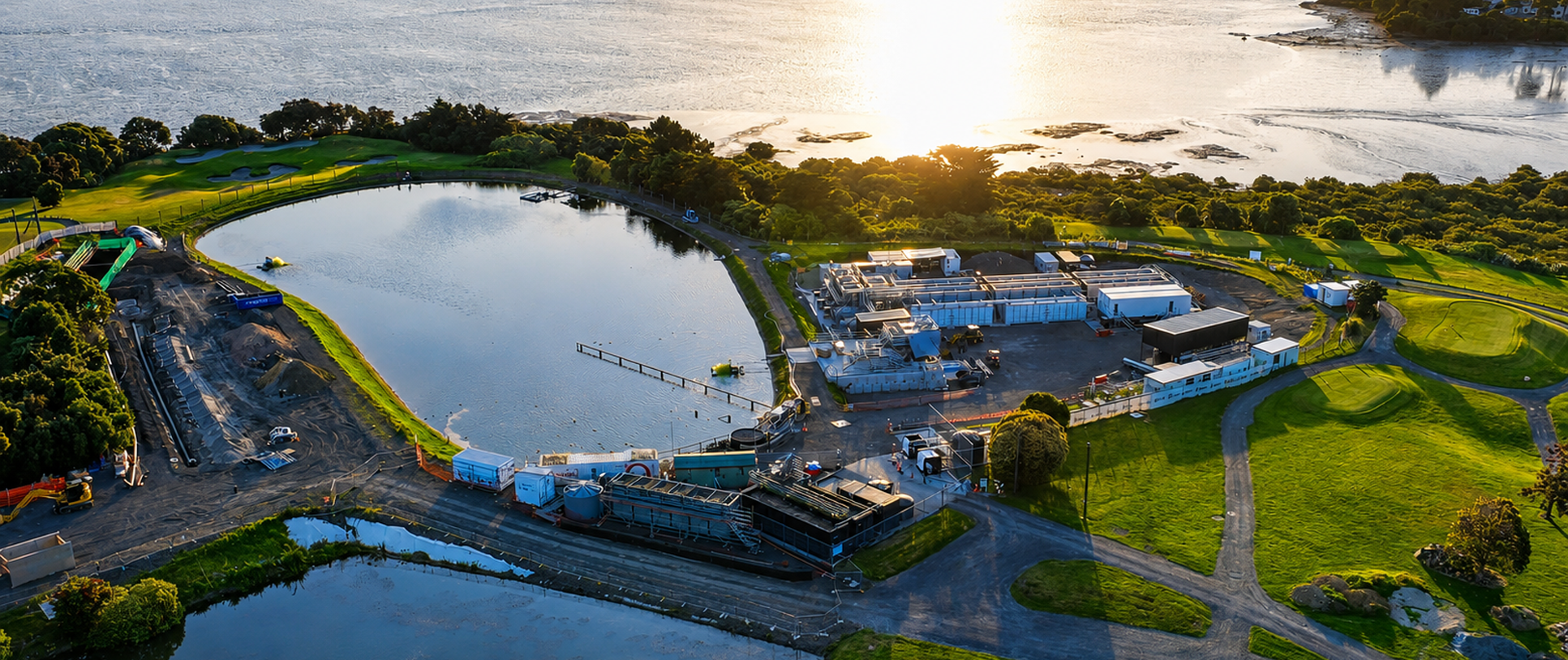
The recent upgrade of the Clarks Beach Wastewater Treatment Plant provides a strong example of the challenges and opportunities facing the sector. The project was undertaken to support the rapidly growing communities of Clarks Beach and Glenbrook, while also improving environmental outcomes through higher-quality wastewater treatment. Once complete, the upgraded facility will significantly increase treatment capacity, supporting projected population growth through to 2030, while delivering enhanced treatment performance through advanced technologies and improved discharge management.
McKay played a key role in the project, delivering critical electrical and control infrastructure that powers the plant’s advanced treatment systems. The facility’s new systems are capable of treating more than five million litres of wastewater per day, ensuring the community has the capacity and resilience required for future growth.
What makes Clarks Beach particularly interesting is that it reflects a challenge being repeated across New Zealand. Communities that were once considered small or rural are now experiencing significant residential development. As populations grow, wastewater infrastructure often becomes one of the first constraints to future expansion.
We’re already seeing this in multiple regions. Existing treatment plants are being upgraded, expanded or completely redeveloped to meet future demand. Whether it’s Auckland’s growing southern communities, the expansion of treatment capacity in Pukekohe, or major wastewater investments in fast-growing districts such as Queenstown Lakes, infrastructure providers are planning decades ahead to ensure communities can continue to grow sustainably.
The future of wastewater infrastructure will be defined by three key trends.
The first is capacity. Treatment plants and network infrastructure will need to accommodate larger populations while maintaining reliable performance. Designing for today’s demand is no longer enough; assets must be built with future growth in mind.
The second is environmental performance. Communities and regulators increasingly expect higher standards of treatment, reduced environmental impacts and greater protection of waterways and coastal environments. This is driving the adoption of advanced treatment technologies, smarter monitoring systems and more sophisticated process controls. Projects such as Clarks Beach demonstrate how modern treatment technologies can improve water quality outcomes while supporting growth.
The third is resilience. Climate change, extreme weather events and growing infrastructure demands are placing additional pressure on wastewater networks. Future facilities must be capable of operating reliably under increasingly challenging conditions, with robust electrical systems, backup power, automation and monitoring playing a critical role in maintaining service continuity.
For infrastructure providers, this means a greater focus on integrated delivery. Successful wastewater projects now require close collaboration between civil, mechanical, electrical and automation disciplines. Increasingly, we are also seeing the benefits of off-site manufacturing and modular construction approaches, which improve quality, reduce programme risks and accelerate delivery. The Clarks Beach project incorporated prefabricated switchgear and control infrastructure that was assembled off-site by McKay subsidiary, MGE New Zealand, before being transported and commissioned on location, demonstrating how innovation can improve project outcomes.
As New Zealand continues to grow, investment in wastewater infrastructure will become increasingly important. While these projects may not always be visible to the public, they underpin many of the things communities value most: housing availability, public health, environmental protection and economic development.
The challenge for our industry is not simply keeping pace with growth. It is building infrastructure that is smarter, more resilient and capable of supporting the needs of future generations.
Projects like Clarks Beach show what is possible when long-term planning, modern technology and collaborative delivery come together. They offer a glimpse of what the future of wastewater infrastructure in New Zealand will need to look like as our communities continue to evolve.
Stuart Archer
McKay Waikato and Western Regional Manager