24 June 2026
Electrify Queenstown: The Energy Shift

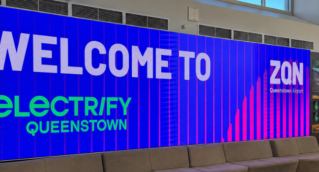
In May, I had the privilege of representing McKay at the Electrify Queenstown event alongside our Electrification Systems Lead, Brandon Munford. With attendance doubling from last year, it was clear that the conversation around an electrified future is growing rapidly, along with the urgency behind it.
Across three days of government insights, local energy project discussions, and emerging technology showcases, one message stood out clearly: communities, businesses, and homeowners are increasingly motivated to accelerate the transition to electrification and renewable energy solutions.
Communities Taking Energy Resilience into Their Own Hands
Discussions around rooftop solar, small-scale private solar farms, and Vehicle-to-Grid (V2G) technology were about far more than enthusiasm for new technology. They reflected a growing frustration within communities such as Queenstown regarding the limitations of the existing electricity network.
Unplanned power outages remain a regular challenge across parts of the district, and many people are recognising that long-term resilience cannot rely solely on network providers. Instead, communities are increasingly looking to create greater energy independence themselves. This shift in mindset from passive consumer to active energy participant was one of the most significant themes observed throughout the event.
Barriers to Adoption Are Reducing
Cost continues to be one of the most cited barriers to the wider adoption of renewable energy solutions, and understandably so. However, the economics are shifting faster than many realise. In many cases, payback periods for solar and battery systems are now less than five years, with continued improvements expected.
Export limitations within the network and limited familiarity with newer technologies still create challenges, particularly for residential and light commercial customers. However, the next major step forward for the industry will come from successfully enabling homes and small businesses to adopt renewable technologies at scale.
Growing Frustration with Energy Dependency
Throughout the event, there was a clear sense of fatigue around ongoing energy dependency. Many people can now see a practical pathway forward through solar, Battery Energy Storage Systems (BESS), and V2G charging technologies, and they are eager to embrace it.
As an industry, the responsibility lies in supporting that transition with the expertise, services, and technologies required to make energy independence both achievable and accessible, rather than aspirational.
Priorities for the Industry
Looking ahead, two priorities stand out. The first is education, helping people better understand what aspects of their energy use they can control, and the impact those decisions can have in a country facing increasing energy demand and infrastructure pressure.
The second is continued progress in affordability, technology availability, and network support for community-led generation. Powering New Zealand sustainably will require collaboration across industry, government, and communities, all working toward the same objective.
McKay’s Role in the Transition
McKay continues to build extensive experience across the renewable energy sector, including electrification marine systems, rooftop and utility-scale solar, geothermal energy, Battery Energy Storage Systems (BESS), and wind farms. McKay is also involved in the first V2G charging trial in Queenstown, positioning the business as both a contributor to and advocate for emerging renewable technologies.
McKay’s teams are already involved in the design and installation of utility-scale solar and battery projects, as well as smaller rooftop solar and individual BESS solutions. As a business, McKay understands the scale of the challenges facing New Zealand’s energy generation and transmission sectors and welcomes the opportunity to contribute to long-term solutions through early adoption, innovation, and strategic planning.