24 June 2026
What happens after dark matters more than we think
New Zealand cities are investing heavily in public spaces. From waterfront redevelopments and civic precincts to urban parks and transport corridors, significant effort goes into creating places that are attractive, accessible and valuable to the communities they serve. But there is a question that is often overlooked when we think about the success of these investments.
What happens after dark?
A public space can be beautifully designed, well-located and heavily used during the day. However, if people stop using it once the sun goes down, it is only delivering part of its potential value.
In my view, the true test of a public space is not how it performs at midday. It is whether people continue to feel comfortable spending time there in the evening.
That is why lighting has become one of the most influential pieces of infrastructure in the urban environment.
Good lighting extends the life of a city. It supports evening activity, encourages movement between destinations and helps create environments where people feel confident to walk, gather and participate in community life. It enables public spaces to remain active for longer and helps maximise the return on investments already made in urban development.
This is becoming increasingly important as cities place greater emphasis on vibrancy, liveability and economic activity.
Restaurants, hospitality venues, events and cultural attractions all rely on people feeling comfortable moving through public spaces after sunset. The more connected and inviting a city feels in the evening, the more likely people are to stay, explore and engage with the businesses and amenities around them.
Lighting plays a significant role in creating that experience.
Yet its contribution goes beyond functionality.
The most successful lighting projects help define the character of a place. They complement architecture, public art and landscape design to create environments that feel distinctive and memorable. In doing so, they contribute to the identity of a city just as much as the physical structures around them.
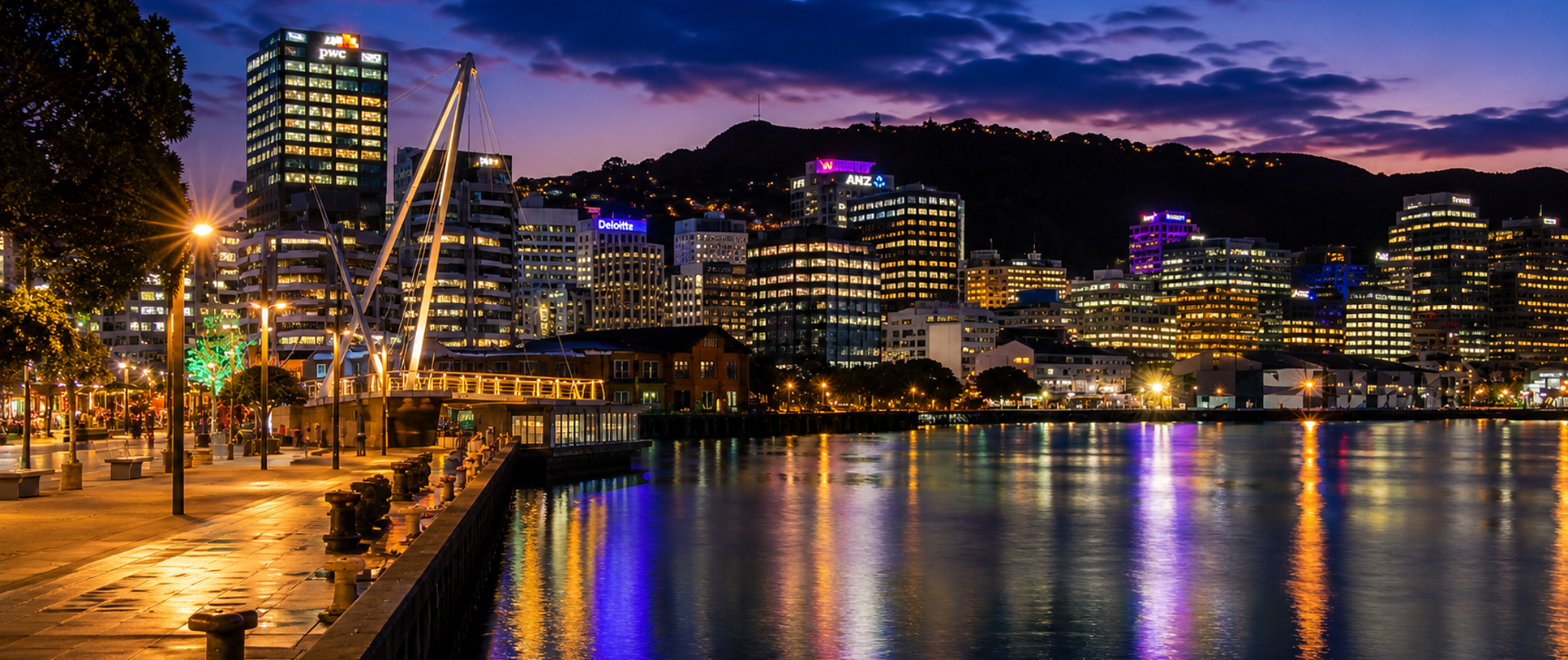
The Wellington Waterfront demonstrates the impact of this approach.
One of the city’s most important public destinations, the waterfront attracts people throughout the day. The lighting design helps ensure the experience continues well into the evening, supporting everything from recreation and events to everyday use by residents and visitors. Rather than serving as a standalone utility, the lighting forms part of the wider vision for how the waterfront functions and feels after dark.
This reflects a broader shift in the way cities think about infrastructure.
Today’s lighting networks are increasingly expected to do more than illuminate streets and pathways. They are being integrated into wider conversations about urban activation, public safety, technology and place-making. They are helping communities get greater value from the spaces they already have.
As New Zealand continues to invest in the future of its cities, the focus should not stop when daylight ends.
Because the success of a public space is ultimately measured by how often it is used, how welcoming it feels and how strongly people connect with it.
And increasingly, those outcomes are determined by what happens after dark.
Tim Manawaiti
McKay Wellington Regional Manager