2 June 2026
The technology is ready. Let’s get on with it.

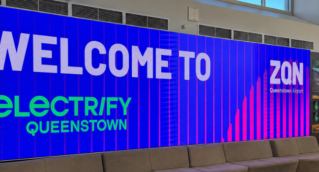
Fiona Bycroft, Executive General Manager – Technology at McKay, recently attended Electrify Queenstown, where she joined a panel discussion on the future of transport in New Zealand. Reflecting on the event, Fiona shares her thoughts on the opportunities electrification presents, the challenges that remain, and why the focus should now be on implementation rather than possibility.
One of the key themes that emerged during the discussion was that the challenge facing electrification is no longer the technology itself. In many cases, the technology is already proven and available today. The bigger challenge is awareness — understanding what these technologies are capable of and having the confidence to implement them.
We still often talk about electrification as though it is something for the future. Yet electric vehicles are now common on our roads, electric ferries are operating, and electric marine technologies are already being used in real-world applications. Increasingly, the question should not be “can it work?” but “how do we implement it?”
One of the interesting contrasts raised during discussions was the timelines often associated with major transport projects. We heard examples of projects taking decades to gain approvals and years to deliver.
Yet at the same time, we have examples showing that change can happen much faster.
McKay delivered the e-Alia project, five electric vessels, in nine months. That was not a concept or a future study. It was real vessels, operating in the water, delivered within a timeframe that many would not expect for a project of that scale.
That is important because it demonstrates something beyond technology capability. It shows what can happen when people move from discussion to action.
New Zealand has a unique opportunity here. We have a high proportion of renewable electricity generation, strong engineering capability, and a long history of solving problems creatively. We also have practical reasons to act.
Fuel costs in New Zealand are high, and we remain heavily dependent on imported energy. Every litre of fuel represents money leaving the country. In contrast, electricity can increasingly come from renewable energy generated here in New Zealand. That creates opportunities not only for emissions reduction, but also for greater energy resilience, cost stability, and keeping more value within New Zealand.
As we move forward, we should also be thinking about how New Zealand technology and capability can contribute. Building local capability strengthens industries, creates skilled jobs, and enables solutions designed around our own transport challenges and operating environments.
Electrification does not mean forcing a single solution onto every application. Different technologies will suit different use cases. But we should be careful not to let process, assumptions, or unfamiliarity become barriers where technology capability is no longer the limiting factor.
One of the things I enjoy most at events like Electrify Queenstown is seeing people experience technologies firsthand. There is often a moment where the conversation changes from “I didn’t think this was possible” to “how could this work for me?”
That shift matters.
The technology is ready. New Zealand has capability. We have real examples of delivery happening now.
Let’s get on with it.
Fiona Bycroft
McKay Executive General Manager, Technology