8 June 2026
New Zealand’s Solar Farm Boom: The Opportunities And Challenges Ahead
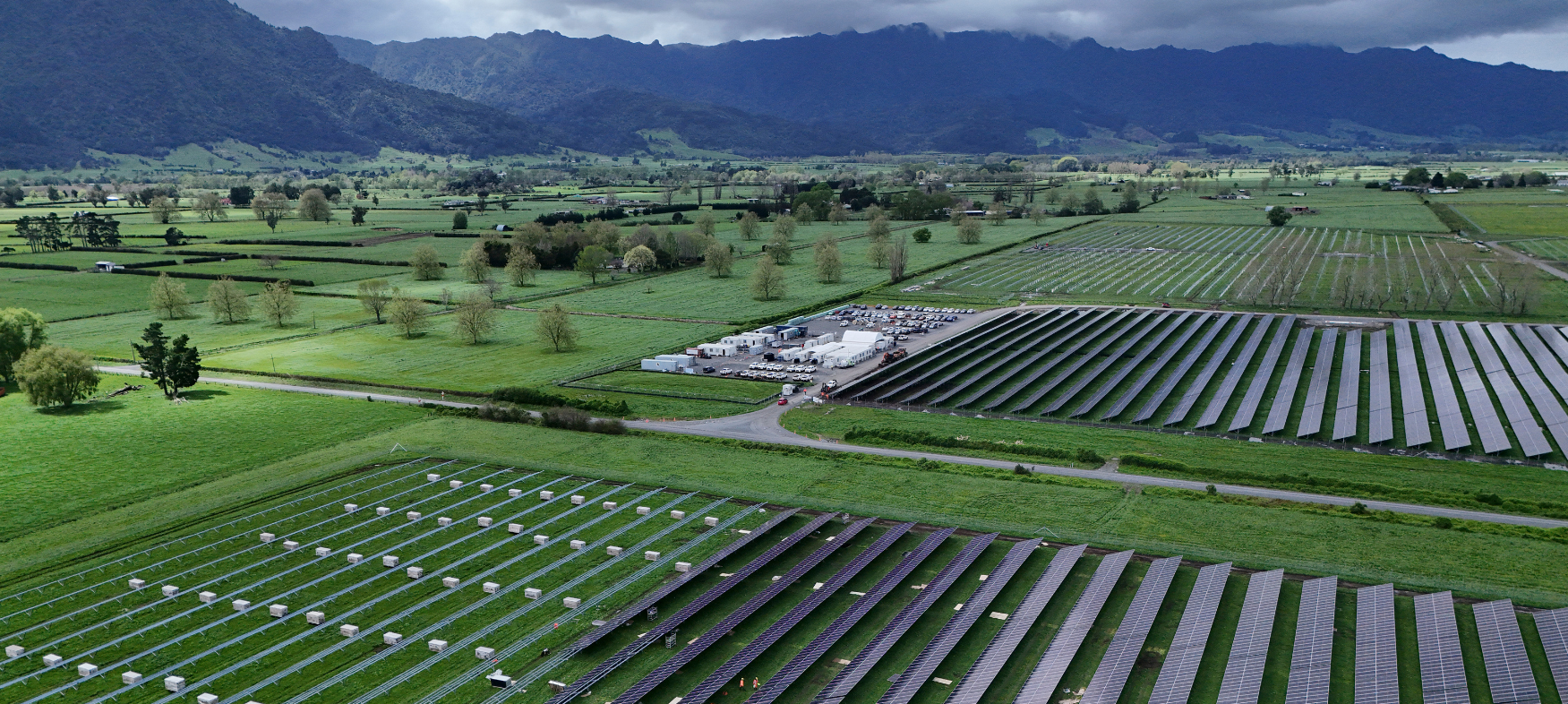
Solar presents one of the greatest opportunities within New Zealand’s electrification journey, but with this momentum comes an important consideration: how do we deliver the energy infrastructure the country needs while maintaining strong community engagement and long-term social licence?
The Growing Demand for Renewable Generation
New Zealand still has a long way to go to fully electrify its economy and meet international climate commitments. While around 85% of electricity generation comes from renewable sources, only around 30% of total energy use is renewable. Significant reliance on fossil fuels remains, with transport, industrial processes and homes making up much of this energy consumption.
At the same time, this challenge presents a major opportunity. As New Zealand transitions toward a lower-emissions economy — and demand inevitably grows — the country will require a substantial increase in renewable generation capacity. Current estimates suggest New Zealand will need around 80% more electricity by 2050 to support future electrification and maintain energy security. This is largely due to the electrification of transport, industry and the increasing demands of data centres.
Why Utility-Scale Solar Matters for New Zealand
Utility-scale solar is becoming an increasingly important part of that transition. Ground-mounted, grid-connected solar farms are scaling rapidly across Aotearoa, with momentum in the sector accelerating significantly over the past two years. Hundreds of megawatts are already operational, while several gigawatts of additional generation capacity are either consented, under construction, or progressing through development.
Solar makes sense for New Zealand’s energy system. Alongside high sunshine hours across many regions, solar generation complements the country’s existing renewable mix by producing electricity during daytime demand peaks and helping preserve hydro storage during dry periods. This diversification strengthens resilience across the grid and reduces pressure on traditional generation sources during times of high demand.
The Role of Battery Storage and Grid Resilience
The integration of Battery Energy Storage Systems (BESS) will further strengthen the role of solar in New Zealand’s energy future. Storage technology will help smooth peaks in generation, improve reliability, support grid stability, and enable greater flexibility as more intermittent renewable generation comes online. Together, solar and storage have the potential to become a critical part of New Zealand’s long-term energy infrastructure.
However, as the sector matures, several challenges are becoming more apparent. Consenting and planning complexity, transmission and grid constraints, supply chain pressures, and evolving power purchase agreement (PPA) structures are all influencing project viability and delivery timelines.
Community Trust and Long-Term Success
Yet one of the most important factors, and arguably the greatest long-term opportunity, is maintaining community trust and social licence.
New Zealanders care deeply about landscapes, food production, biodiversity, and local identity. Environmental decisions are often viewed through the lens of stewardship, whakapapa, and intergenerational responsibility, not simply economics. Large-scale infrastructure projects can generate concern when communities feel developments are being imposed on them, rather than designed alongside them with long-term outcomes in mind.
That means utility-scale solar in Aotearoa cannot simply replicate offshore development models and expect universal acceptance. The projects most likely to succeed will be those that recognise energy infrastructure is ultimately about people as much as megawatts.
McKay has been embedded in communities across Northland and New Zealand for more than 90 years, and we intend to be here for many more. We want these projects to succeed for Aotearoa over the long term, and we are building relationships with developers and EPCs who share that vision. Tauhei Solar Farm is one example of what that future can look like.
Emma Brosnahan
Renewable Energy Partnerships Manager